
June 11, 2026
By Randal Terrell
Recovery from addiction, mental illness, trauma, or any major life challenge is rarely easy. Most people enter recovery carrying emotional pain, uncertainty, frustration, and sometimes even resentment toward the changes they feel they must make.
Many individuals find themselves thinking:
“I have to go to counseling.”
“I have to take my medication.”
“I have to exercise.”
“I have to stop drinking.”
“I have to attend support meetings.”
“I have to change my lifestyle.”
At first glance, these thoughts may seem harmless. However, the words we use when talking to ourselves can have a powerful impact on our attitude, motivation, and long-term success.
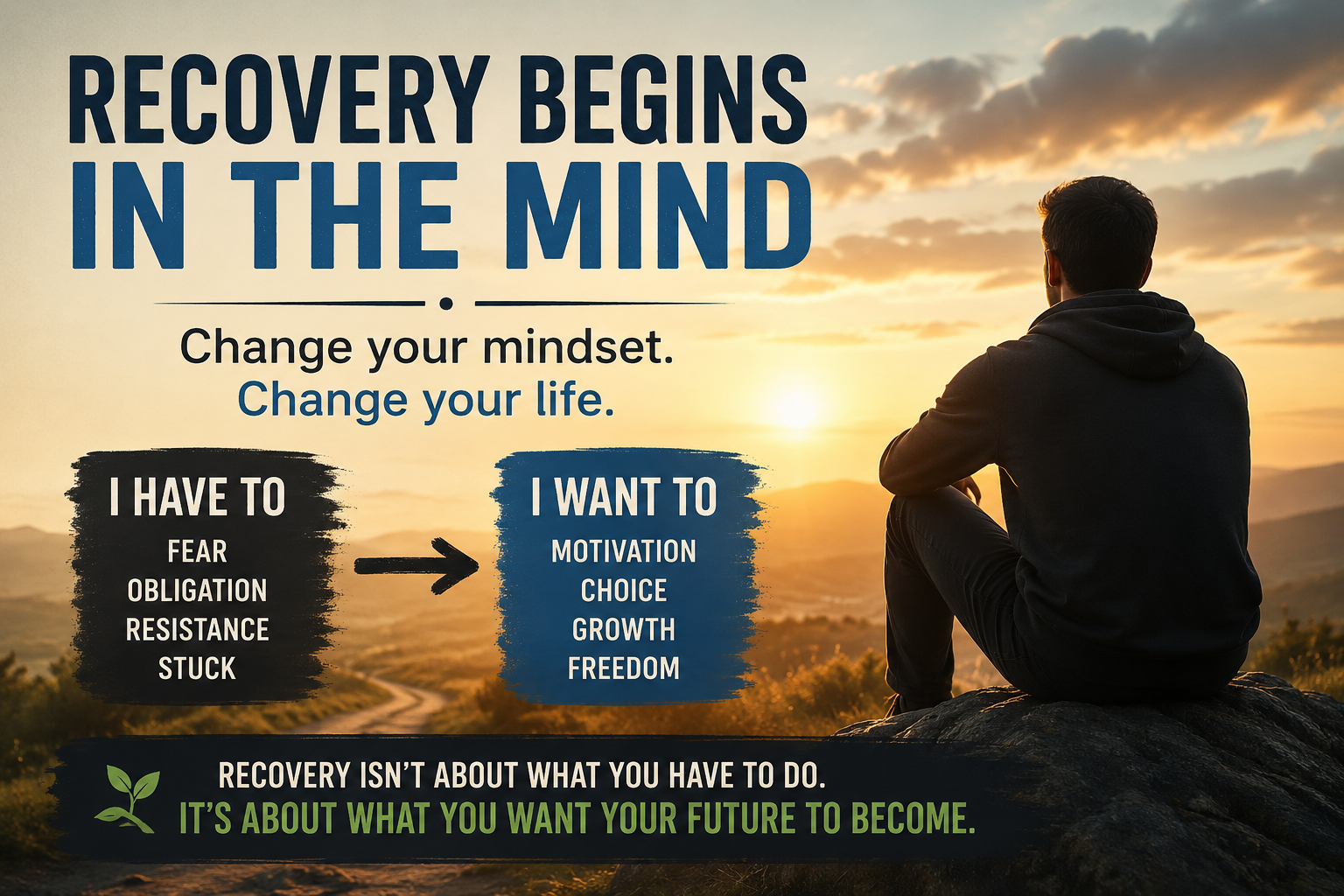
One of the most important lessons I have learned is that recovery often becomes easier when we change our mindset from “I have to” to “I want to.”
The Difference Between Obligation and Choice
When we tell ourselves we “have to” do something, our brain often interprets it as an obligation, punishment, or restriction.
Nobody enjoys feeling forced.
Even when the activity is beneficial, our minds naturally resist things that seem imposed upon us. This resistance can create frustration, resentment, and a lack of motivation.
On the other hand, when we begin saying “I want to,” something changes.
Instead of focusing on what we are giving up, we begin focusing on what we are gaining.
Consider these examples:
Instead of:
“I have to go to therapy.”
Try:
“I want to learn new ways to manage my emotions.”
Instead of:
“I have to stop using substances.”
Try:
“I want a healthier and more peaceful life.”
Instead of:
“I have to take care of myself.”
Try:
“I want to feel better physically and emotionally.”
The actions remain the same, but the mindset changes completely.
Why Thoughts Affect Feelings
Many people assume that feelings come first and thoughts follow. In reality, our thoughts often influence our emotions.
When we repeatedly tell ourselves negative stories, we tend to feel discouraged.
When we focus on opportunities, growth, and purpose, we often feel more hopeful and motivated.
Imagine two people attending the same recovery meeting.
The first person thinks:
“I have to be here.”
The second person thinks:
“I want to be here because I want my life to improve.”
Both individuals are sitting in the same room, but their emotional experience will likely be very different.
The first person may feel trapped.
The second person may feel empowered.
Our interpretation of events often shapes how we feel about them.
Recovery Is an Investment in Yourself
One of the biggest mindset shifts occurs when we stop viewing recovery activities as chores and begin viewing them as investments.
Every healthy choice becomes a deposit into your future.
Every counseling session is an investment.
Every support meeting is an investment.
Every healthy meal is an investment.
Every good night’s sleep is an investment.
Every day of sobriety is an investment.
Recovery is not simply about avoiding negative outcomes. It is about building a better future.
When we focus on the benefits rather than the sacrifices, motivation often increases.
Focus on What You Gain
Many people in recovery spend too much time thinking about what they are losing.
They focus on:
The substances they can no longer use.
The habits they must give up.
The lifestyle they are leaving behind.
The discomfort of change.
While these feelings are understandable, they often overlook something important.
Recovery gives us things too.
Recovery can provide:
Better health.
Stronger relationships.
Improved emotional stability.
Greater self-respect.
Financial freedom.
Peace of mind.
Hope for the future.
A renewed sense of purpose.
When we focus on these gains, recovery becomes something we move toward rather than something we are forced into.
Gratitude Changes Perspective
Another powerful tool for changing mindset is gratitude.
When we focus exclusively on problems, recovery can feel overwhelming.
When we take time to recognize what is going well, our perspective often changes.
Gratitude does not mean ignoring difficulties.
It means recognizing that challenges are not the entire story.
Even during difficult seasons, there is often something worth appreciating:
A supportive friend.
A family member who cares.
A counselor who listens.
A roof over your head.
Another day of sobriety.
Another opportunity to grow.
These small reminders can help shift attention away from frustration and toward progress.
Progress Matters More Than Perfection
Many people become discouraged because they expect immediate results.
Recovery rarely works that way.
Healing often happens gradually.
There may be setbacks.
There may be difficult days.
There may be moments when motivation feels low.
That does not mean recovery is failing.
It means recovery is happening.
Success is not measured by perfection.
Success is measured by continuing to move forward.
Every positive step counts.
Choose the Story You Tell Yourself
Perhaps the most important lesson of all is that the story we tell ourselves matters.
If we constantly tell ourselves:
“This is impossible.”
“I’ll never change.”
“I have to do this.”
Recovery becomes harder.
But if we begin telling ourselves:
“I am growing.”
“I am learning.”
“I want a better future.”
“I am worth the effort.”
Everything starts to feel different.
The circumstances may not change overnight, but our attitude toward them can.
Final Thoughts
Recovery from addiction and mental illness involves more than changing behaviors. It also involves changing the way we think.
The words we use shape our attitudes, our emotions, and our willingness to keep moving forward.
The next time you catch yourself saying, “I have to,” pause for a moment.
Ask yourself:
“What is the deeper reason I am doing this?”
Then try replacing those words with:
“I want to.”
That small change may seem insignificant, but over time it can transform recovery from a burden into an opportunity.
Recovery is not about what you have to do.
Recovery is about what you want your future to become.
Leave a Reply