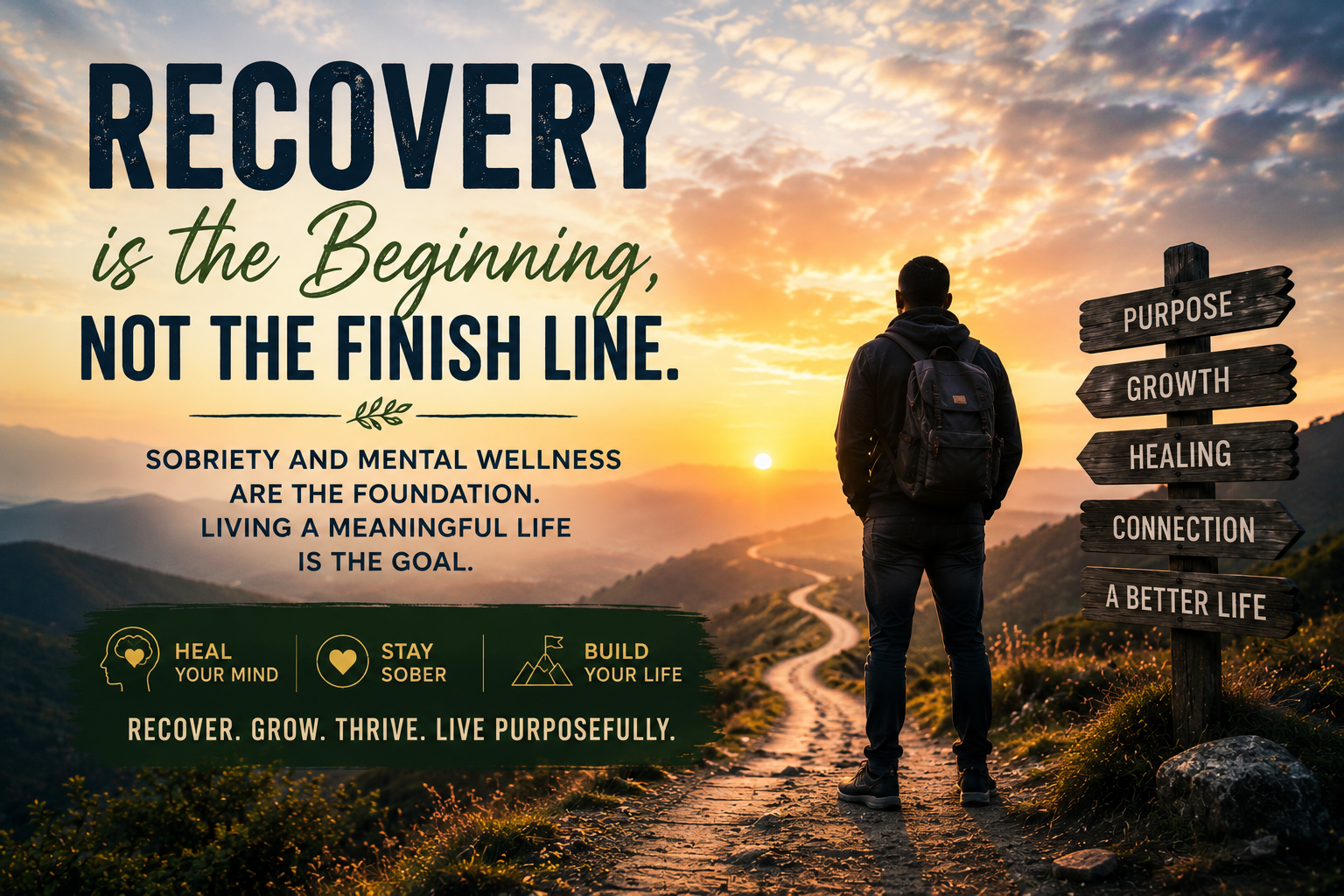
When people talk about recovery, they often focus on two important milestones: achieving sobriety and improving mental health. Both are incredible accomplishments that require determination, courage, and perseverance. They deserve to be celebrated because they represent hope and the possibility of a new beginning. However, recovery should never be viewed as the final destination. Instead, it is the foundation upon which a healthier, more meaningful life can be built.
One way to think about recovery is to compare it to graduating from high school. Earning a diploma is a major achievement, but no one expects a graduate to receive a diploma and then stop growing. The diploma itself is not the ultimate goal. Its purpose is to open doors to new opportunities, whether that means pursuing higher education, learning a trade, starting a career, serving the community, or achieving personal dreams. In the same way, sobriety and mental wellness are not the end goals of recovery. They are tools that provide the opportunity to build a better life.
Recovery gives us something that many people once believed was impossible—a second chance. It offers the opportunity to rebuild damaged relationships, pursue education, establish meaningful careers, discover new hobbies, strengthen our faith, and reconnect with family and friends. Recovery creates possibilities that addiction and unmanaged mental illness often take away. While achieving sobriety and improving mental health create these opportunities, it is our responsibility to make the most of them.
One of the greatest dangers after recovery is believing that simply maintaining sobriety or mental wellness is enough. Imagine someone who has worked incredibly hard to regain their sobriety and improve their mental health, only to spend every day sleeping, sitting at home, or simply waiting for time to pass. Over time, boredom, loneliness, isolation, and a lack of purpose can begin to replace the excitement that came with early recovery. Although rest is important and everyone needs time to recharge, living without purpose or meaningful activities can leave room for unhealthy thoughts and old behaviors to return.
This does not mean that every moment of every day must be filled with activity. Instead, it means creating a life that contains purpose, balance, and healthy routines. Recovery is often easier to maintain when there is something worth protecting. Having goals, responsibilities, relationships, and meaningful activities reminds us why we chose recovery in the first place.
One of the healthiest ways to protect recovery is to replace destructive behaviors with positive ones. Addiction and mental illness often consume a tremendous amount of time and emotional energy. When those unhealthy behaviors are removed, an empty space is created. The important question then becomes, “What will I choose to fill that space with?”
For some people, that answer may be spending more time with family and friends. Others may choose to continue their education, learn new skills, volunteer in their communities, develop a rewarding career, exercise regularly, read books, pursue creative hobbies, strengthen their faith, attend support groups, or mentor others beginning their own recovery journey. These activities do far more than simply occupy time. They create purpose, build confidence, strengthen relationships, and reinforce the healthy habits that support long-term recovery.
Recovery should never be viewed only as the absence of addiction or the reduction of mental health symptoms. It should be viewed as the beginning of a better life. Recovery gives us the freedom to make healthier choices, pursue meaningful goals, and live according to our values instead of being controlled by addiction, destructive behaviors, or unmanaged mental illness. Rather than simply removing pain, recovery creates opportunities for growth, fulfillment, and lasting happiness.
Just as physical fitness requires ongoing exercise, recovery requires continual attention and maintenance. Maintaining good mental health involves healthy routines, stress management, supportive relationships, self-awareness, and seeking help when necessary. Maintaining sobriety requires accountability, healthy coping skills, and making daily choices that support long-term success. Continuing to care for ourselves is not a sign of weakness—it is one of the strongest investments we can make in our future.
One of the greatest gifts recovery provides is the opportunity to become more than someone who has overcome hardship. It allows us to become someone who is actively building a meaningful future. Our experiences can become sources of wisdom. Our struggles can become opportunities to encourage others. Our recovery can inspire hope in those who believe change is impossible. Instead of merely surviving, recovery allows us to truly live.
The ultimate goal of recovery is not simply to be sober or mentally healthy. Those achievements are essential, but they are only the beginning. The real goal is to use that sobriety and mental wellness to create a life filled with purpose, healthy relationships, meaningful work, personal growth, service to others, and genuine joy. Recovery opens the door, but we must choose to walk through it.
Recovery is not about reaching a finish line. It is about building a life so meaningful that protecting your sobriety and mental health becomes one of the easiest and most rewarding decisions you make each day. The greatest success in recovery is not simply remaining sober or mentally well—it is creating a life that makes you grateful you chose recovery in the first place.
Leave a Reply