
By Randal Terrell
Recovery can take many different forms, and what works for one person may be completely different from what works for someone else. Throughout my own recovery journey, I have learned that healing does not always happen in a doctor’s office or traditional therapy setting. Sometimes healing can happen outdoors, surrounded by nature, working alongside an animal that cannot speak a word but can still communicate in ways that are difficult to explain.
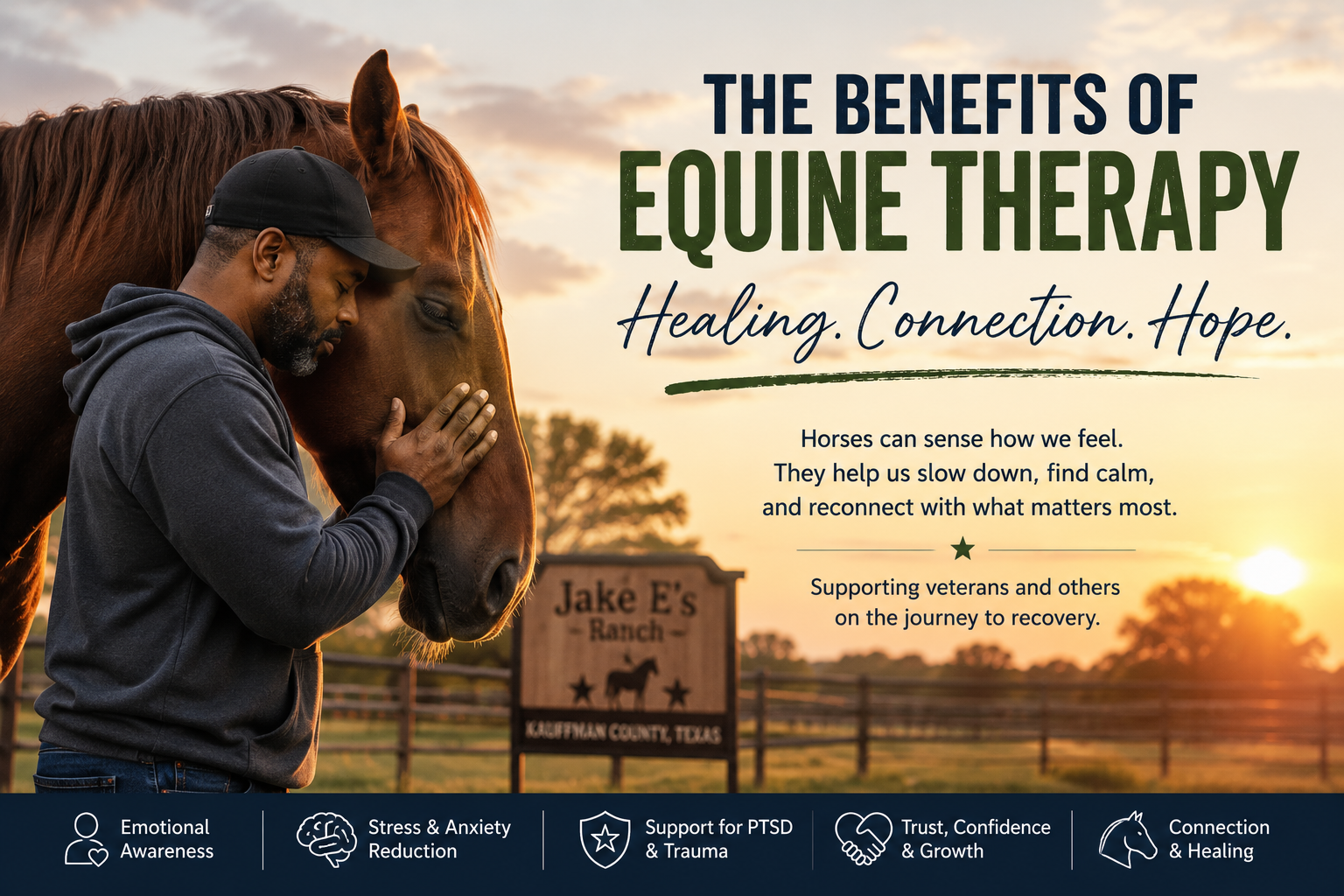
One experience that had a meaningful impact on my recovery was participating in equine therapy. I participated in the Horses for Heroes program, which in my case was funded through the Texas Veterans Commission. My experience took place at Jake E’s Riding Round Up in Kaufman County, Texas, where I had the opportunity to work with therapist Lara Yates, a horse professional named Rose, and the horses themselves.
Before participating, I did not fully understand how spending time around horses could become part of a therapeutic experience. What I discovered was that horses have a remarkable presence. They are large and powerful animals, yet they can also be calm, gentle, and extremely responsive to the people around them.
During my sessions, I became very aware of the relationship between my own emotional state and the behavior of the horse. When I was tense, the horse seemed to recognize that tension. As I became calmer and more relaxed, I noticed that the horse seemed to become more relaxed as well. This created an experience in which I had to become more conscious of my own emotions, body language, and state of mind.
For someone dealing with stress or anxiety, learning how to slow down and become aware of what is happening internally can be valuable. A horse does not care about your job title, your bank account, your past mistakes, or how other people see you. The interaction takes place in the present moment. For me, being around the horses encouraged me to slow down, focus on what was happening around me, and simply be present.
My experience with equine therapy also had a deeply personal connection to my childhood. I grew up in a rural area, and there was a ranch directly on the other side of the fence from where we lived. Growing up, seeing and smelling livestock was simply part of everyday life. Those sights, sounds, and smells became part of my memories long before I understood how meaningful they might become later in life.
When I participated in equine therapy as an adult, being around the horses and the ranch environment brought back a tremendous feeling of nostalgia. It reminded me of an earlier period in my life and created a sense of familiarity that I had not experienced in a long time. The environment helped bring about a feeling of calmness and peace that had been difficult for me to find elsewhere.
I believe this is one of the things that made equine therapy so meaningful for me. It was not simply about working with a horse. It was the entire experience—the animals, the outdoor environment, the familiar smells and sounds, the peaceful atmosphere, and the connection to memories from my childhood. Together, these things created a setting where I felt comfortable enough to slow down and experience a sense of calm.
Equine-assisted approaches may be used alongside professional mental health care to support people dealing with a variety of challenges. Depending on the individual and the type of program, working with horses may provide opportunities to practice emotional awareness, communication, trust, confidence, mindfulness, and stress management. Some programs also work with veterans and others who have experienced trauma or symptoms associated with post-traumatic stress.
I would recommend considering equine therapy to people who are working through recovery or simply dealing with some of life’s stresses, anxiety, depression, or the effects of traumatic experiences. Everyone’s experience will be different, and equine therapy should not be viewed as a replacement for necessary medical or mental health treatment. However, for the right person, it may be a valuable addition to a broader recovery and wellness plan.
I especially believe veterans may benefit from exploring programs that incorporate horses into therapeutic or wellness activities. Veterans can face unique challenges when transitioning from military service or coping with difficult experiences, injuries, stress, or trauma. Programs that provide structured activities in peaceful outdoor environments may offer another avenue for veterans to connect with others, develop new coping strategies, and work toward personal recovery goals.
One of the most important lessons I have learned through my own recovery is that we should remain open to different paths toward healing. Recovery does not have to happen in only one place or through only one method. Counseling may help. Medication may help when appropriate. Exercise may help. Volunteering may help. Spending time in nature may help. Support from family and friends may help. And for some people, standing beside a horse on a quiet ranch may help too.
My experience with equine therapy reminded me that sometimes we need to step away from the noise and pressures of everyday life and reconnect with something simpler. For me, the horses and the ranch environment brought back memories of my childhood while helping me experience a sense of peace in the present.
The horses could not solve my problems for me, but they gave me an environment where I could slow down, become more aware of myself, and experience a calmness I had not felt in a long time. That experience became another valuable part of my recovery journey.
Recovery is personal, and every person must discover the combination of resources and experiences that works best for them. Equine therapy was one of those experiences for me. I am grateful that I had the opportunity to participate, and I hope that sharing my experience encourages other people—especially veterans and those navigating recovery, stress, anxiety, depression, or trauma—to explore the many different paths that may help them find healing, peace, and hope.
Sometimes recovery begins with a conversation. Sometimes it begins with a walk. And sometimes, it may begin by simply standing quietly beside a horse.
Leave a Reply